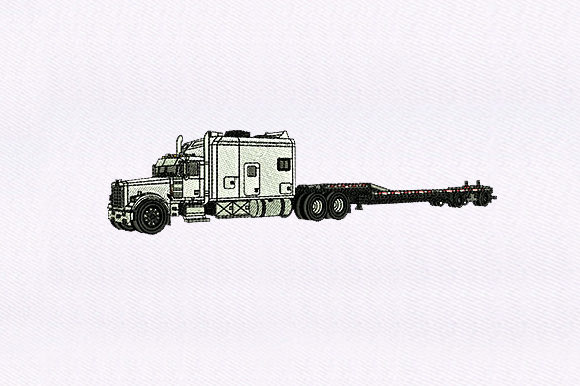
Trailer Truck: A Craft Fair Embroidery Review
First Impressions for the Market Table
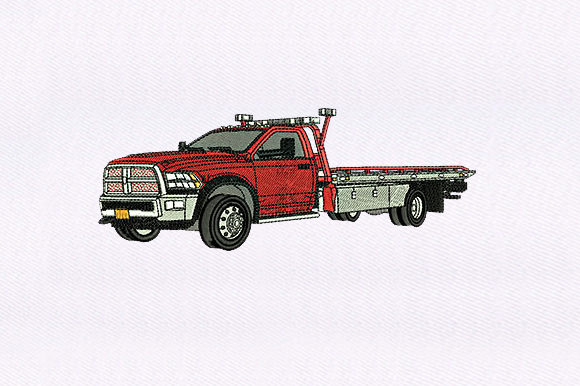
As an embroidery designer preparing for a weekend craft fair, my first assessment of any machine embroidery design is whether it stops customers in their tracks. When reviewing the Trailer Truck design, the immediate impression is one of bold, linear Americana. This is not a delicate or overly intricate floral; it is a graphic, horizontal statement piece that evokes nostalgia, travel, and rustic charm. For a booth display, this visual clarity is essential. Customers walking through crowded aisles need to understand what they are looking at within seconds. The Trailer Truck succeeds here because its silhouette is universally recognizable, making it an ideal anchor for transportation-themed merchandise or vintage-inspired collections.
The specific dimensions of this design—8.00 inches wide by 2.14 inches high—are critical to its marketability. This extreme aspect ratio makes it a specialized asset rather than a general-purpose fill. It screams "accent" rather than "centerpiece." As I plan my table layout, I see this design functioning best as a hem detail on tea towels, a cuff embellishment on aprons, or a horizontal band across the bottom third of a canvas tote bag. It feels purposeful and intentional, which elevates the perceived value of the handmade product. It avoids the awkward empty space that often plagues square designs placed on rectangular goods.
Strategic Product Placement and Merchandising
When curating inventory for an Etsy shop or a physical market stall, versatility is key. However, the Trailer Truck requires strategic placement due to its unique footprint. Here is how I evaluate its performance across different categories:
- Tote Bag Design: This is arguably the strongest application. Placed near the bottom edge of a natural canvas tote, the 8-inch width creates a grounded, balanced look. It leaves ample negative space above for personalization or monograms, increasing the customizability factor for buyers.
- Tea Towel Embroidery: Flour sack towels are a craft fair staple. The horizontal orientation fits perfectly along the lower hem. Because the stitch count is substantial at 22,555 stitches, it provides enough coverage to feel premium without overwhelming the lightweight fabric, provided the correct stabilizer is used.
- Apron Embroidery: On a waist tie or across the bottom ruffle of a farmhouse-style apron, this design adds character. It appeals to the "road trip" or "mobile vendor" aesthetic that resonates with fellow small business owners and food truck enthusiasts.
- Embroidered Patch: Given the length, this could be digitized or trimmed into a long rocker patch for hats or jacket backs. However, ensure the internal details remain legible if scaled down significantly.
- Pillow Covers: For lumbar pillows, this design is perfect. Standard square pillows might make the truck look lost, but a 12x20 inch lumbar pillow showcases the horizontal flow beautifully.
Production Reality: Stitch Count and Fabric Considerations
From a production standpoint, 22,555 stitches for an 8-inch span indicates a design with significant density. This is generally positive for commercial embroidery because it suggests good coverage and durability. However, as a maker, you must respect the physics of thread and fabric. High stitch counts in a concentrated area can lead to puckering on lighter fabrics like quilting cotton or thin linen.
I always advise testing this specific embroidery file on scrap material before committing to batch production. Use a medium-weight cutaway stabilizer for knits or stretchy materials, and a tear-away for stable woven fabrics like denim or canvas. If you are stitching on textured terry cloth towels, consider using a water-soluble topping to prevent the stitches from sinking into the pile. The last thing you want at a craft fair is a sample where the trailer wheels are buried in towel loops, making the design look muddy.
Furthermore, verify your hoop size compatibility before purchasing or downloading. The design requires a minimum sewing field of 203.2mm x 54.3mm. Many standard 4x4 hoops will not accommodate this width. You will need a 6x10 hoop or larger. Confirming this technical requirement prevents mid-production frustration and ensures you have the right equipment to produce this digital embroidery file efficiently.
Visual Appeal and Booth Display Strength
At a handmade market, your booth is your billboard. The Trailer Truck design contributes to a cohesive visual narrative. Because of its distinct shape, it pairs exceptionally well with other linear elements, stripes, or gingham patterns. When creating a printable mockup for online listings, photograph the finished item in natural light to capture the sheen of the rayon or polyester threads. The horizontal lines of the truck draw the eye across the product, which is a subtle psychological cue that encourages viewers to scan the entire item rather than focusing on a single spot.
For Etsy sellers, this design photographs well because it doesn't require complex staging. A flat lay of a tote bag with the truck embroidered near the bottom tells the whole story. The design’s inherent "vintage transport" vibe does the heavy lifting for branding. It signals quality and niche appeal, distinguishing your shop from generic clip-art vendors. Just ensure your listing photos show the true scale; an 8-inch design looks very different on a screen than it does in person.
Careful Use Notes for Professional Results
While the Trailer Truck is a robust design, experienced embroiderers know that every file has limitations. Pay attention to these potential pitfalls:
- Scaling Risks: Do not reduce this design below 70% of its original size unless you have editing software to adjust stitch density. At smaller sizes, the 22,555 stitches will become bulletproof armor, and fine details like windows or wheel spokes may merge into solid blocks of thread.
- Color Contrast: Test thread colors against dark fabrics. If stitching white or yellow thread onto navy denim, you may need extra underlay stitches to prevent the fabric color from bleeding through. Conversely, on white fabric, ensure your bobbin tension is perfect to avoid dark specks showing on top.
- Curved Surfaces: While great for flat totes and towels, this long, rigid design can be tricky on curved cap brims. The distortion required to fit an 8-inch straight line onto a curved surface may warp the truck's proportions. Stick to flat or cylindrical items like sleeves or pant legs for best results.
- File Format Verification: The design comes in multiple formats including PES, DST, JEF, and VIP. Always check that your specific machine reads the chosen format correctly. Some older machines may struggle with newer file versions or specific color codes embedded in the design assets.
Final Verdict for the Creative Entrepreneur
The Trailer Truck is more than just a novelty graphic; it is a highly functional craft fair product asset when used correctly. Its unique 8x2.14 inch dimensions solve specific design problems for horizontal spaces that square designs cannot address. For the boutique maker or creative entrepreneur, it offers a professional, nostalgic aesthetic that translates well to high-margin items like customized bags and premium linens.
Success with this design lies in respecting its technical specifications and leveraging its visual strengths. By pairing it with the right substrates, maintaining proper stabilization, and presenting it in a way that highlights its retro charm, you can turn this small shop product into a consistent seller. Whether you are stocking an Etsy store or setting up for a weekend festival, the Trailer Truck brings a level of specialized craftsmanship that discerning customers appreciate. Always remember to confirm commercial licensing terms before selling finished goods, and never skip the test sew-out. In the world of machine embroidery, preparation is just as important as creativity.